Haircut & Styling
Men's Haircut Styles: How to Choose a Style That Suits You
Your hair type, face shape, daily routine and upkeep matter more than the trend. Here is how to weigh them and pick a cut you can live with.
- By The Express Cuts Team
- Published
- 6 min read
In this article
The short answer
Choose a men's haircut by working through four things in order: your hair type, your face shape, how much styling you will really do each morning, and how often you are willing to return for upkeep. A style that fits all four will look good on an ordinary Tuesday, not just when you leave the chair.
What should you look at first when choosing a haircut?
Most people start with a photo. It is better to start with your own hair, because the photo was taken with someone else's. The four questions below take a couple of minutes and rule out most of the styles that would disappoint you.
Your hair type
Hair type decides what a cut can physically do. Straight hair shows every line, so sharp fades and side parts look clean but also show growth quickly. Wavy hair has natural movement and suits textured cuts and longer tops. Curly hair needs length to settle and tends to look best when the sides are tapered rather than cut very tight against a bulky top. Fine or thin hair usually looks fuller when it is kept shorter and textured, because long, flat lengths reveal the scalp.
Your face shape
Think of face shape as a way to balance proportions, not as a rulebook. A round face often benefits from some height on top and tighter sides, which adds length. A square face already has a strong jaw, so it can carry both clean, classic cuts and softer texture. A long face usually looks better without extra height, so a fuller side or a fringe can help. An oval face is the most forgiving. The hair page has a simple guide to cuts by hair type and face shape if you want to compare them side by side.
Your daily routine
Be honest here. A messy quiff takes product and a few minutes in front of the mirror. A buzz fade takes a towel. If you wash your hair and leave the house, choose a cut that falls into place without help.
Your upkeep budget
Tight fades look their best for a short window, so they need frequent visits. Longer scissor cuts grow out slowly and forgive a late appointment. If you will only come in every couple of months, avoid styles that depend on very short sides. Our guide on how often men should get a haircut goes through typical intervals style by style.
Which men's haircut styles are worth knowing?
These are some of the best-known styles. Knowing the names makes the conversation with your barber much easier.
| Style | What it is | Works well with | Upkeep |
|---|---|---|---|
| Classic side part | Tapered sides with a defined part and a neat top | Straight or slightly wavy hair; office dress codes | Moderate; needs a little product |
| Taper fade | Hair gradually shortens down the sides and back; can sit low, mid or high | Almost every hair type | Moderate to high; the line softens quickly |
| Buzz fade | A very short clipper cut on top with faded sides | Thick hair, warm weather, no-fuss routines | Low daily effort; frequent trims to hold the shape |
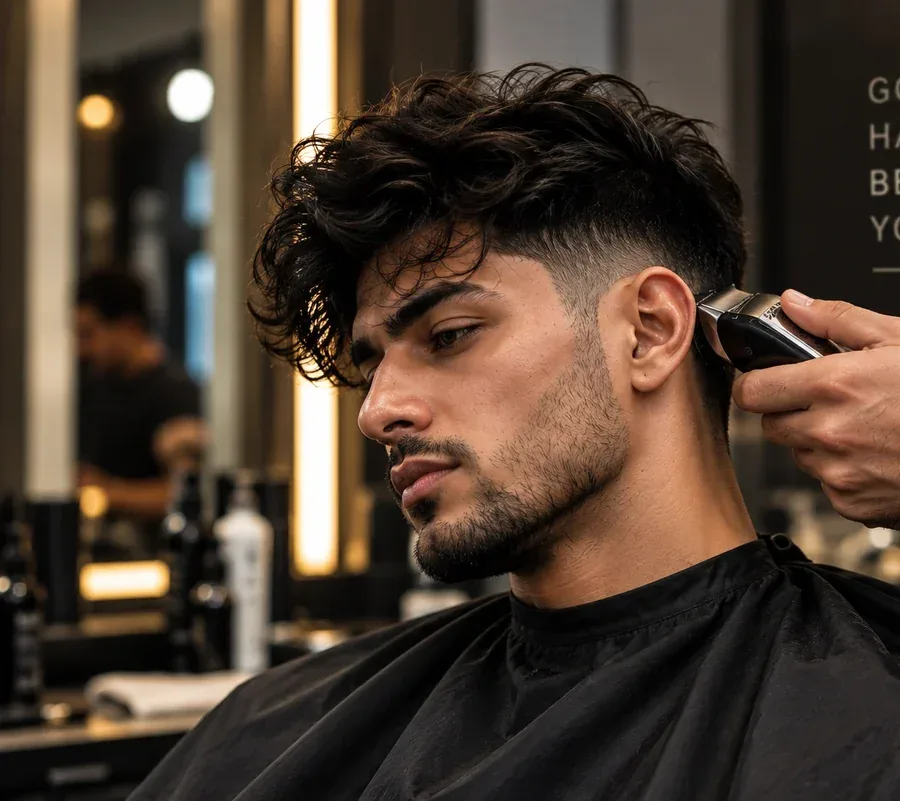
| Textured cut | Choppy layers on top that add movement and volume | Wavy, thick or fine hair that needs body | Low to moderate; a small amount of product helps |
| Messy quiff | A longer front lifted up and back with a loose finish | Thick or wavy hair with some length | Moderate; takes daily styling |
| Flow cut or wolf cut | Longer lengths with layers for shape | Wavy or curly hair; men growing their hair out | Low on trims; needs regular washing and care |
What is the difference between a taper and a fade?
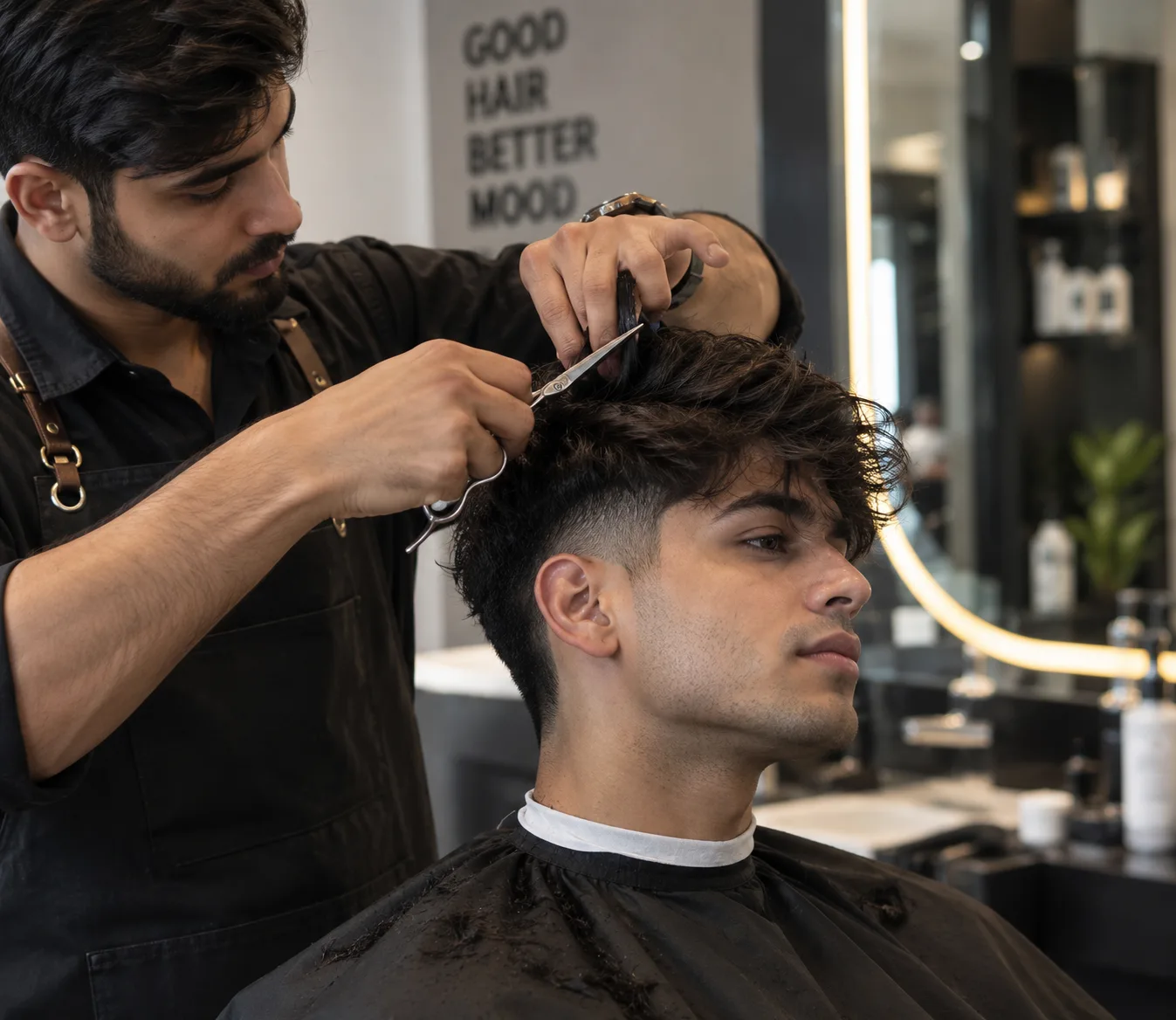
A taper gradually shortens the hair towards the neckline and around the ears, and it usually leaves some length at the very bottom. A fade does the same job but goes shorter, often blending down to skin. In practice, many barbers use the words together. Low, mid and high tell the barber where the shortening begins: a low taper starts just above the ears and stays subtle, while a high taper starts near the temples and looks far bolder.
If you are unsure, start with a low taper. It is the easiest to wear and the easiest to grow out, and you can always go higher on the next visit.
How do you explain the style you want to a barber?
- Bring two or three photos of the style, ideally on someone with hair like yours.
- Point out what you like in each picture: the length on top, the sides, or the shape around the ears.
- Say how you wear your hair on a normal day and how long you will spend styling it.
- Mention anything you have had trouble with, such as a cowlick, a thinning crown or a stubborn fringe.
- Agree the shortest length on the sides before the clippers start. Hair can always come off later, but it cannot go back on.
What mistakes should you avoid?
- Copying a photo without checking the hair type. A wavy quiff will not behave the same way on very straight hair.
- Going far shorter than you have ever worn it. Step down gradually unless you are happy to live with the result for a few weeks.
- Choosing a style your routine cannot support. A cut that needs ten minutes of styling looks wrong on days you give it none.
- Waiting too long between trims on a fade. Once the line has grown out, the cut looks like a different style.
How do you keep a new haircut looking right?
Ask your barber how to style the cut before you leave, and which product they used. Wash according to your scalp rather than a fixed habit: the American Academy of Dermatology suggests basing how often you shampoo on how oily your hair gets, and applying shampoo to the scalp rather than the full length. Book your next trim before the shape has gone, not after.
In short
- Start with your hair type, then consider face shape, routine and upkeep.
- Learn the names of a few styles so you can explain what you want.
- A low taper is the safest starting point if you are unsure.
- Choose a style your daily routine and visit schedule can support.
Related questions
What is the easiest men's haircut to maintain day to day?
Short cuts such as a buzz fade take the least daily effort, although they need regular trims to hold their shape. If you want fewer visits, a slightly longer textured cut is usually more forgiving.
Which haircut suits most face shapes?
A low taper with some texture on top suits most face shapes because it keeps proportions balanced without adding extreme height or width.
Should I bring a photo to my haircut?
Yes. Two or three photos show length and shape far better than words, especially if they feature someone with a similar hair type. See our FAQ on reference photos.
More answers are on our FAQ page.
Sources
This article is general grooming information, not medical advice. Services vary by salon; see our service pages for what Express Cuts offers.
Ready for a cut that suits you?
See the cuts we offer and talk through the options with your barber at Express Cuts.